


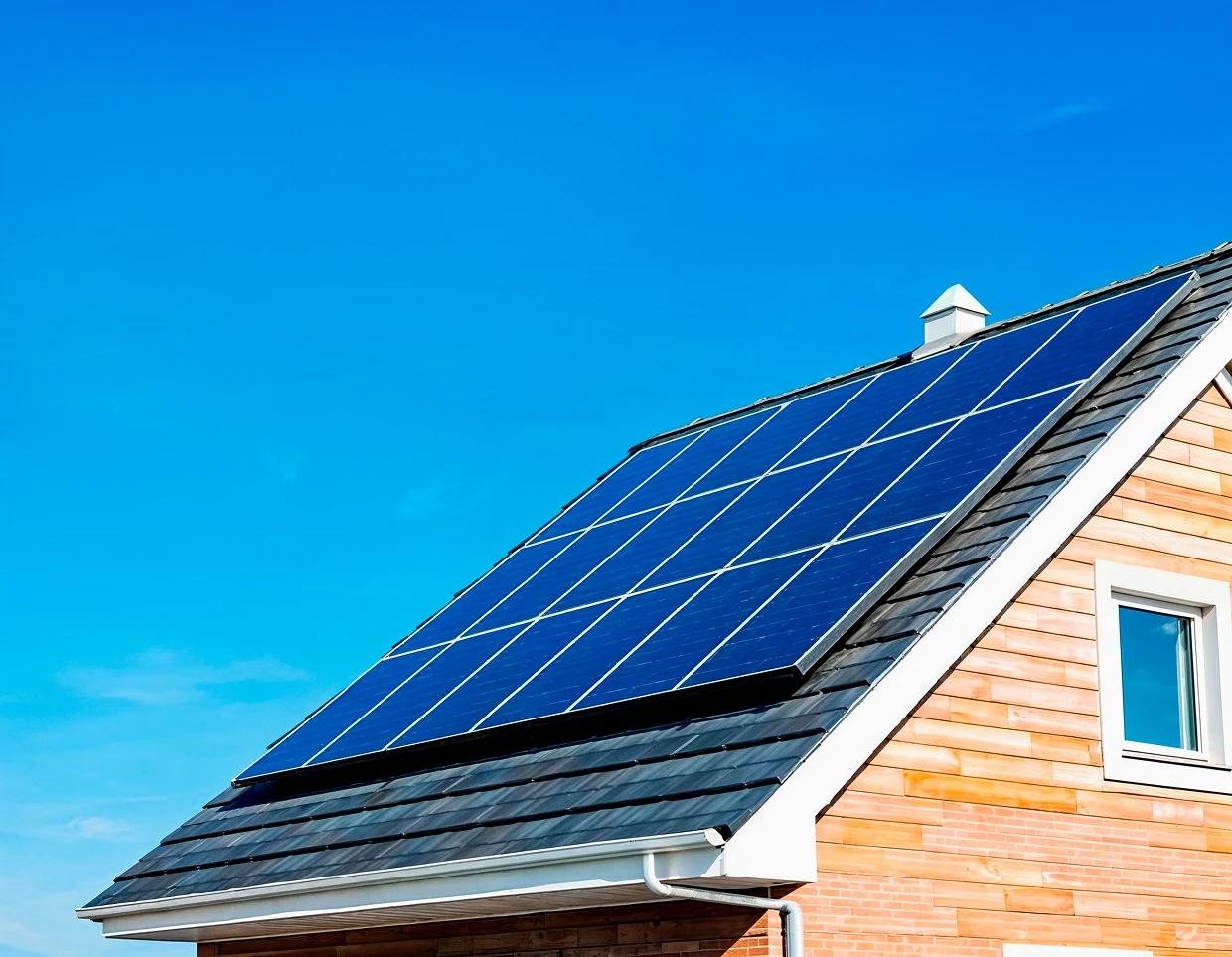
Project Overview
Sunergy Residence is a rooftop residential solar system designed to reduce the homeowner's reliance on grid power while keeping installation minimally invasive to daily life. Rather than defaulting to a standard-size package, the system was sized specifically to the household's actual consumption pattern, measured directly rather than estimated from national averages, so the homeowner isn't paying for capacity they'll never use or left under-covered during peak hours.
Consultation & System Design
- On-site energy audit to establish daily and peak consumption, tracked across actual usage rather than relying on utility-bill averages that can smooth over real peak demand.
- Roof assessment for panel placement, shading, and structural load, checking not just available surface area but how shade patterns shift across the day and through the seasons.
- Custom system sizing based on real usage data, not estimated averages, so the final system reflects what the household actually draws rather than a generic residential template.
Installation
- Panel and inverter installation completed within a single work week, sequenced to minimize the number of days the household needed to work around active construction.
- Wiring and safety inspection to local residential code standards, completed before the system was ever switched on rather than treated as a final formality.
- System activation with a homeowner walkthrough of the monitoring app, so the household understood what normal output looks like from day one rather than discovering it by trial and error.
Homeowner Considerations
Roof age and existing shingle condition were checked carefully before any panel layout was finalized. This matters more than it might seem, since mounting hardware installed over aging or already-compromised roofing tends to become the real cost driver on residential solar jobs down the line, not the panels or inverter themselves. Catching a roofing issue before installation, rather than after panels are already mounted over it, avoids a much more expensive and disruptive fix later.
Monitoring & Support
The homeowner has ongoing access to a simple production dashboard that shows daily and cumulative output without requiring any technical background to interpret. The system is also covered under a standard workmanship warranty kept separate from the panel manufacturer's own equipment warranty, so if an installation-related issue ever comes up, it's clear which party is responsible for addressing it rather than the homeowner having to figure that out themselves.
Equipment Selection
Panel and inverter selection was based on the roof's available surface area and the household's actual peak-hour usage, rather than simply choosing the highest-capacity components available. The goal was a system that covers real demand efficiently, since maximizing panel count for its own sake would have added cost without adding meaningful value on a roof with finite usable space.
Permitting & Utility Coordination
Local permitting and utility interconnection paperwork were handled as part of the project scope from the outset, rather than left for the homeowner to navigate separately. That included submitting the required documentation to the utility for interconnection approval and coordinating inspection scheduling, so the homeowner's only real involvement was approving the design and being present for the final walkthrough.
Outcome
The household now generates a significant share of its own power, with a monitoring dashboard giving the homeowner clear, ongoing visibility into daily production and savings rather than having to wait for a monthly utility bill to see the impact. The upfront work on real usage data and roof condition is what makes that outcome hold up over time, rather than just on the day the system was switched on.


FAQ
Got Any Questions?
Clear answers about our solar solutions, installation process, and long-term performance—so you know exactly what to expect before getting started.
For most residential and small commercial projects, installation takes 1–3 days once permits and approvals are in place. Larger or more complex systems may take longer. The full process—from assessment to activation—typically spans 2–6 weeks, depending on local regulations.
We provide end-to-end energy solutions for businesses, including solar system design and installation, energy audits, efficiency optimization, battery storage, and long-term maintenance. Every setup is tailored to reduce operational costs and improve energy independence.
Yes. All systems include manufacturer warranties on panels and inverters, along with a workmanship warranty on installation. Warranty terms vary by product, but most panels are covered for 20–25 years.
Absolutely. Small businesses often see some of the fastest returns on investment due to predictable energy usage and rising electricity costs. We scale systems based on actual demand, not assumptions.
Solar systems require minimal maintenance. Occasional cleaning, system monitoring, and annual inspections are usually sufficient. We offer maintenance plans to ensure optimal performance and early issue detection.

Built on the belief that better energy decisions start with clarity and trust.